The Earthlore Experiment: When Tribal Musicians Meet AI
What happened when tribal musicians used voice-activated AI to break language barriers, draft grants, and preserve their heritage from their phones?
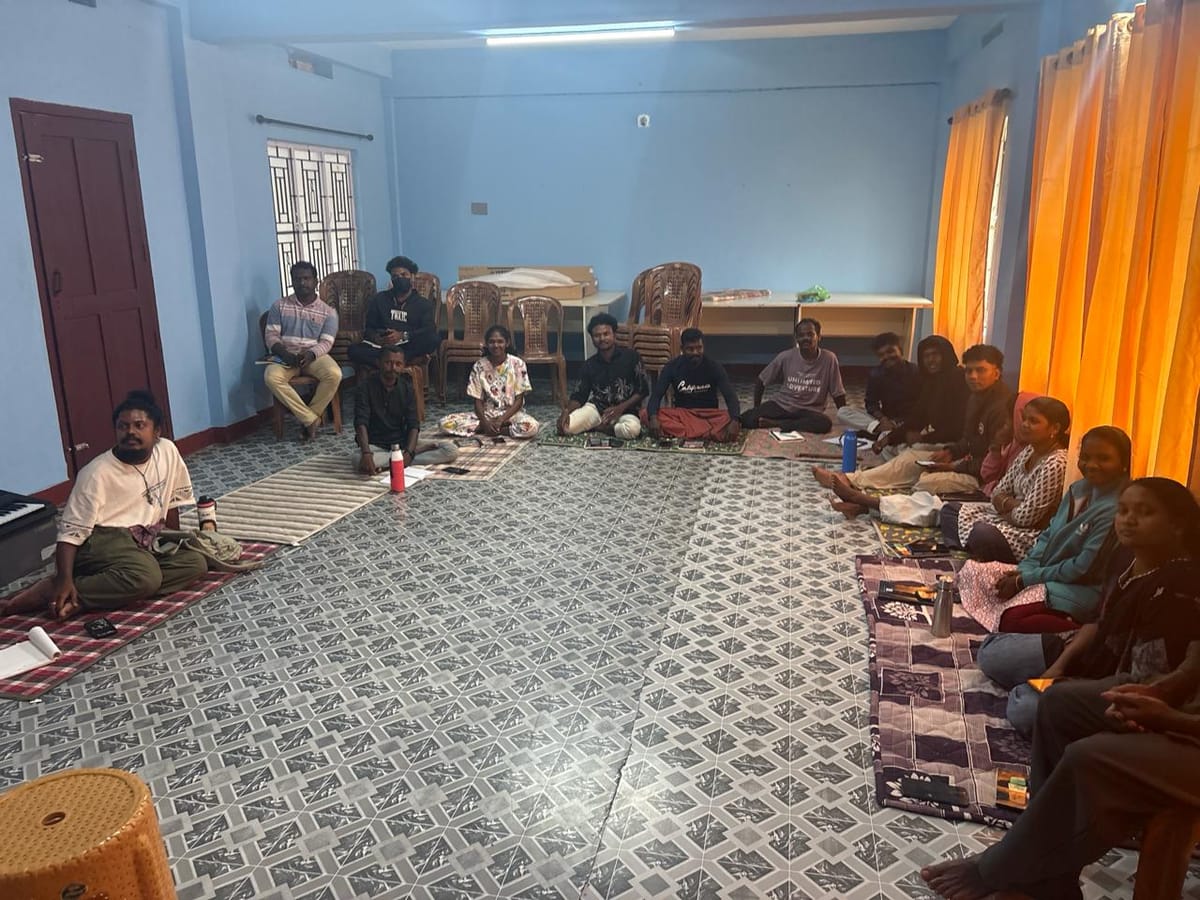
What happens when tribal musicians from remote corners of Kerala and Tamil Nadu are introduced to AI tools through their first tech-training as Earthlore Fellows?
The second month of Earthlore Fellowship: Season 2 marked a new milestone! For many of the Fellows, it was their very first introduction to AI tools and formal technology training.
What we found, once the session began, surprised even us.
For this workshop, we chose Google Gemini. It handles regional Indian languages and voice interaction far better than most alternatives. This is a crucial factor given that many of our fellows are more comfortable speaking than typing, and far more fluent in Malayalam or Tamil than English.
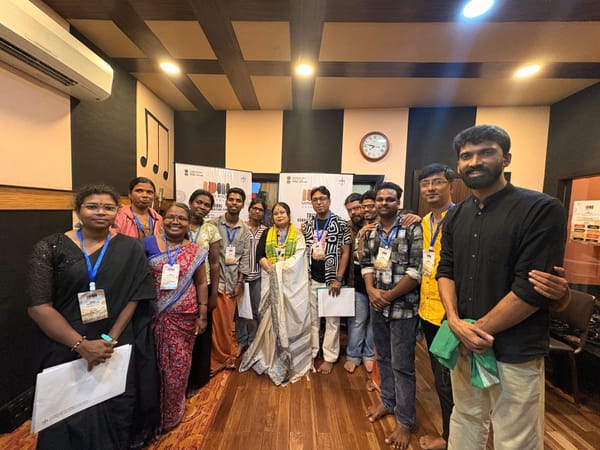
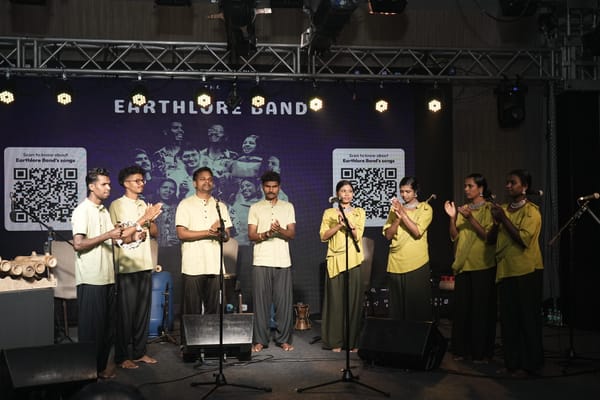
The cohort consisted of 17 tribal musicians who had arrived at the Earthlore Fellowship to learn music as a professional practice and build sustainable careers, alongside three co-fellows who are professional musicians from India and abroad. Mid-session, a profound realization hit us: this global technology shift would either exclude these artists further, or become the ultimate tool for breaking through the systemic barriers they face every single day.
An Honest Beginning: AI Can Lie
We didn't start with tech-evangelist hype. Instead, we began with a live demonstration of AI’s fundamental flaw: it hallucinates.
We asked Gemini about the Earthlore Fellowship itself. The AI confidently invented facts, hallucinated dates, and spun entirely false details. The message to the room was clear: this tool is incredibly powerful, but it will lie to you with absolute confidence. You have to stay awake.
This wasn't meant to scare them away; it was meant to inoculate them. Once they understood that AI is a tool with real limitations, they could use it without blind trust the same way you use a hammer without assuming it never misses your thumb.
From Friction to Freedom
After that honest reckoning, we explored what the tool could actually do on the Android phones already in their pockets.
For fellows struggling with English, here was an instant, voice-activated translator. Suddenly, a massive barrier dissolved, allowing them to communicate fluidly with co-fellows who only spoke English. For those intimidated by bureaucratic red tape, the tool could draft formal letters to government agencies or funding bodies in seconds. For musicians trying to decipher dense grant applications, contracts, or terms of service, it became a personal legal translator.
The transformation was immediate.
A fifty-year-old musician picked up his basic phone for what was a genuinely alien interaction. By the end of two hours, he was drafting grant letters to government officials, translating complex English documents, and brainstorming social media content to promote his music.
When we split them into small groups to brainstorm how this technology could solve their specific, everyday challenges, the room caught fire. One group realized they could use AI to design posters and write compelling captions for their music and cultural content. Another team saw a clear path to build branding around the cultural goods they create, while others began experimenting with how to document and present their ancient traditions to a global audience. All of this was achieved simply by speaking Malayalam or Tamil into a phone.
The Question That Changes Everything
Then, a fellow asked a question that shifted the axis of the entire session: “Why doesn't the AI know much about tribal music and culture?”
We searched the database together. The AI’s knowledge of Paniya music, Jenu Kuruba, and Mavila traditions was thin, frequently inaccurate, or completely absent. A heavy question hung in the room: If AI doesn't know this exists, will people in the future think it never did?
That is not a technical question. That is a sovereignty question.
We talked about how the data used to train AI systems reflects whose voices, histories, and cultures are historically valued enough to be documented. We drew a direct parallel to history: just as their ancestors were excluded from colonial land ownership documentation and subsequently rendered landless, a lack of digital documentation today risks rendering their cultural heritage extinct in the digital age. It became clear that tribal musicians must not just be passive users of AI, but active contributors to it ensuring their knowledge and traditions are baked into what these machines "know."
The Shift
In a single afternoon, something fundamental shifted. Quiet fellows became vocal. Musicians who had barely touched digital tools were asking sharp follow-up questions.
The energy in the room wasn't the shallow, bright-eyed enthusiasm of a tech startup pitch. It was something much steadier: the quiet recognition that a global tool, handled with care, could flatten barriers like language, geography, lack of formal education that had kept them on the margins for generations.
The AI wasn't there to replace their skill, their knowledge, or their artistry. It was there to help them navigate a world that wasn't built for them.
The Lesson
This session provided a blueprint for introducing responsible AI literacy to communities historically excluded from technology narratives:
- Start with the truth about its limits: Demystify the tech so they aren't fooled by it.
- Put it directly in their hands: Meet them where they are, using the tools they already own, for their own self-determined purposes.
- Ask the harder questions: Challenge them to think about what it means when certain knowledge is left out of the future and what they want to do about it.